Sunday, April 10, 2016

Writers need Technology too!

I recently encountered a thread on Linkedin wherein members where asking about backups. 

With the technological advances, backups have become easier to do and come at a lower cost, too, and could even be free up to a certain storage size. 

For starters, here are the top tools I would recommend: 


Cheezburger science technology mindwarp gears

1. OneDrive - This is Microsoft's offering. Try to enroll in One Drive for Personal use and there will be free 15GB storage space. 
Download OneDrive installer here. 

2. Google Drive - This is a part of Google's offering and also offers 15GB free storage space. 
Download Google Drive installer here. 
technology

3. Dropbox - There is a 2GB free storage.
Download Dropbox installer here.


4.  iCloud - If you are an iPhone or Mac User, chances are you already know about this.  This offers up to 5GB free storage.  The iCloud comes ready with your iTunes installation.  To get iTunes, click here.


These are all great tools and would help writers in ensuring that manuscripts are backed-up, and not only that, that these documents are available on any device.

Let's take a look at the benefits of these Cloud solutions:
1.  Accessibility from anywhere as long as there's Internet connection
Going on a trip and worried about the extra weight of your laptop? Worry no more because as long as you have the above installed, you will be able to access your files.  Personally, I like OneDrive because you can also download MS Word, and when you open your word document, you may edit on a tablet, or any device, save it, and sync it back to the cloud.  When you return from your trip, your manuscript is--voila--updated!

2. Backup - The Cloud applications mentioned above will create a folder on your laptop, and if you want files to be automatically synced on the Cloud, then make sure to save these documents on the said folder.
This is an example:  
Now, there will be no more headache of trying to recover files from a corrupted hard disk, or a bad sector from your hard disk.
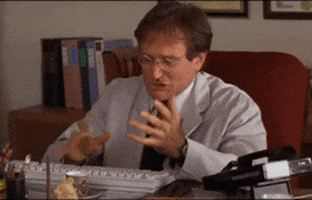
angry computer broken robin williams working

3. Transfer of files - Are you one of those techy people who change laptops as often as there is a new processor available in the market?  If yes, then it is best to be on the Cloud.  This will ensure that when you boot up your new laptop, all you have to do is download the Cloud solution, install it, log in your credentials, and all your data on the Cloud will be synced back to your new laptop.  Cool, isn't it?

4. Access from Multiple devices - One device isn't enough for you?  Then make sure a Cloud solution is installed on all your devices.  I am a fan of this feature because I have a laptop (powered by Windows) and a tablet, an iPhone 6Plus, and an iPad 2.
If my working space can accommodate a laptop, sure, I open my laptop.  But if I'm in the beach, basking under the heat of the sun, then my iPad would do, and I wouldn't have any problem with accessing my updated files.

Our work takes a lot of time to finish, and there's a need for us to ensure that whatever we spent time on would not get lost that easily.

If you have questions, feel free to email me, or leave a comment.

Cheers to writing!

Tuesday, April 5, 2016

Word Count, is it important?

There are many different types of writer. Some sit in front of a computer and key in whenever inspiration strikes and finish a story or an essay in one sitting while others need to be more organized and delve into creating an outline before starting to push through with  Chapter One. 

But regardless of what type of writer one is, there are certain rules that has to be adhered to when writing a manuscript. 

Here are some guidelines that will help us stay focused on the word count. 

1. Short story - A short story usually ranges from 500 words to a thousand, and could go up to 8,000 words. It depends on the length that is required by your target publisher. Usually, publishers especially magazines require up to a thousand words only. For Writer's Digest submissions, it usually is up to 1,500. For the prestigious Palanca awards, it allows up to 8,000 words. Other word count requirement varies so before submitting your work, make sure that a research has been done so that the manuscript will not be automatically discarded. 

2. Novels - For novels, the word count ranges from 50,000 words up to 80,000 words. Most publishers would frown upon a longer submission, and why is that? It's because the longer the manuscript is, the more pages it would consume once it gets published. 

3. Epic - While typically, novels don't go beyond 80,000 words, the word count usually ranges from 100,000 words up to as long as you desire or your story calls for. But there are rules. If you're still beginning and you want to get traditionally published, going beyond these numbers may cause an automatic rejection of your manuscript since it would require a lot of investment when publication comes. There are other factors considered like the length of time it would take to review and edit, what the standard length is that is acceptable to the target market, etc. 

All in all, it is important to be conscious of the word count to manage the overall flow of the manuscript. 

Now, how will one know how many words have been written already?

For one, MS Office has that feature.  Just check this out:
And another powerful tool can be found here on this website: http://www.wordcounttool.com/
Copy and paste your manuscript and hit Submit.
And... here you go.

So, good luck writing, and keep that passion burning.


Monday, April 4, 2016

Why I like A Walk With Jane Austen

Six years ago, my mentor gave me “A Walk with Jane Austen” by Lori Smith as a birthday gift.  I read my mentor’s birthday message written on the inside of the book flap, flipped through the first few pages, and put the book in a shelf.  Having done that, I never thought that it would become a favorite, and it would leave a mark in my life.

When I went home to Batangas a month ago, I got bored, which led to my browsing the bookshelf inside my room and found, to my delight, the gift that I received from several years back.  I read the book jacket again, and I was surprised to learn that the storyteller was thirty-three years old when she wrote it—the same as me now; quit her job—likewise; and was busily exploring a writing life—me too!  Our lives couldn’t have been more alike.
With a freshly brewed coffee and steaming curiosity, I started to read Lori’s journey, wondering how it ended for her.  I believe I’d like to know because brave as I was when I resigned from my job, there are moments of uncertainties when I question myself and listen to the ramblings inside my head about what my future would become now that I have taken the leap of faith.  If Lori’s ended well, then maybe it could turn out great for me too.  Although drawing parallels between her story and mine, and believing there to be a similar direction for our fates is ridiculous, I still wondered.

Lori described her job as difficult, I would say that mine was challenging.  Although I welcomed the challenges but later on quit, I couldn’t, wouldn’t say that it was because I never liked what I did, but simply put, that I felt a greater passion calling out to me in the field of writing.

There are several points where Lori’s journey almost felt like I own them:
“I saved thousands of dollars and determined to leave my job and write for a year, to see if I could make it.”  A smile touched my lips as I read this passage because this was exactly what I did.  Three months ago, I was still in the corporate world handling project implementations.  One day though, I told myself that since I’m very passionate about writing, now’s a good time as any to quit and try to make it in this field.  If or should nothing come out of it, I could go back to gathering system requirements, testing, and staying up late nights while waiting for the new version of the application to be rolled-out to users.  The only difference, but a significant one, was that I saved thousands of pesos and not dollars.  So Lori was way better equipped than I in chasing after a dream.

“I started to date again…”  When I came to this line, I chuckled at first.  Then I started laughing really hard because I started dating too.  It wasn’t because I badly wanted to get into a committed relationship or rush into marriage, but rather because I had to know why I missed out on dating.  I contacted old flames and met with them.  And found out that the man I dated long ago still had not changed.  He’s a good man, but I still couldn’t figure out where we were.  Maybe I should date someone new because although some believe that love could be sweeter the second time around, there’s just about a number that would say that love previously unfound would bring immense joy when finally stumbled upon.  I don’t want to believe that all the stumbling I’m allowed to have in this lifetime is done for.  So I’ll traipse and stumble some more.

“I started going to an Anglican church that I love.” My cousin invited me to join a Christian Fellowship group and I have been attending for several weeks now.  My faith never wavered, but I wasn’t entirely religious.  Being back with a group helped me remember the words of God, and how He promised that He would never forsake me.  Each time I kneel now on the pew, bow own, clasp hands in front of my face and pray, I would feel warm because I have grown stronger in faith.  If I had been afraid before, I was able to rid myself of that feeling.

Fourth, while I have not succumbed to depression yet, with the piles of rejection letters I’m getting from agents I wrote to represent my book, if I do not keep on praying, going to church, and listening to my small Christian group’s constant encouragement, I just might find myself more than just disheartened too.

Nowadays, I also think that sleeping and being awake attained such close kinship; the difference for me though was that sleeping meant reaching farther and more beautiful places while the latter encompassed for me the four-wall confines of my car as I drove around familiar grounds.

Lori’s dream of a marriage didn’t materialize as the book wraps up, but maybe it is fated for there to be a book two, some sort of A Walk with another famous author, Madeleine L’engle perhaps, whom she also adores and who ended up married unlike Jane Austen.

I wasn’t hoping for marriage.  Adopting a baby and making the baby grow experiencing what could have been a rougher life is what I want.  Provided of course, that somewhere between the time that I wrote this and the time that I did adopt a baby, I wouldn’t develop some crazy, manic personality imbalance that would render me unfit for motherhood.

These points, aside from countless others I’m no longer able to enumerate, touched me with a tranquil fascination.  I wrote my mentor saying that I finished reading his gift. 

Embarrassed, I added in my note that maybe, there’s a reason I only put my hands on the book recently.  It wouldn’t have touched me immensely before the way it did me now that I’m probably experiencing a similar level of prolific confusion interspersed with utopia that Lori got when she was the same age as I.

Lori’s book ended with roughly seventy-five thousand words; mine was sixty-five thousand.  Needless to say, she got hers published while I still work on having mine out in the market.  Hers talked about the quiet, satisfying “step into a life of grace"; mine talked about miracles. My dream may be a far cry from happening, but I have started acting on it.  And that is what’s important.

The Gap between Forever

In 2012, after a breakup, I decided to pursue a different track--one that I knew was something I wanted, but did not have the time to attend to before.  Yes, that's writing.

It began with just the gist of how the story would unravel.  Supposedly, the story is to take place in just one day.  One day! Imagine that, and how it has transformed since then.

The Gap between Forever (I know, there should be an "and something" here, but the I didn't know what to add. LOL) is the story of a woman who was diagnosed with cancer, and her battle against it, and how she would reveal the sickness to her husband.  It gives the reader a look into the protagonists lives back when they (Emilia and David) met, how they ended up with each other, until that day when she had to tell him about the Big C.  

Okay.  So maybe it sounded like a typical love story--maybe.  But there's more to it.  I love twists and writing about significant revelations are what I aim for whenever I pen a short story or novel.

I rarely talk about this book because I am not a romantic. Duh!  But I simply enjoyed writing the twist.  So there.

I usually offer the book for free at Amazon for five days, so if you happen to be interested, just send me a message and I will forward you a copy.

Get a copy here.

And if you happen to like it, to support us Indie Writers, please don't forget to leave a comment and rate the book.

Since then, I pushed on to write more.  I ghost write at times, and focus on the fantasy series Breaking the Scroll. 
book fantasy young adult epid

If you love writing, write.  That's how the journey should start.  Dream, and then act on it.

Cheers to everyone who are fascinated with words, whether in spawning them or reading them.


Sunday, April 3, 2016

Top Five Things to Write About

Of all the topics in the world, what are the top five items that fiction writers should write about? 

5. Mystery - Everybody wants to read a mind-boggling story about someone who died and how the mystery was solved. Laying out the clues step by step and in a non anti-climactic way could be difficult, but start reading best-selling mystery writers and the techniques might just unfold for us writers. There's no need to reinvent the wheel. Learn from the masters. 

4. Dystopian - Is it true that Dystopian is dying? Too bad because this topic seemed to be what's sought for in movies. Why? Because a hero or heroine in a world where everything seemed to be failing is quite a good story to pass the time. 

3. Horror - Not everybody is into horror stories, but once you have found your niche in the market, horror fans are actually loyal to this segment. The more gory it is, the better. Just deviate from what has been written already. Bring something new. Let a ghost sit right at the shoulders of your main character all throughout the story and let the protagonist wonder why his shoulders are hurting all along. Ooops, that one had been written already. 
Try another twist. 

4. Fantasy - Everybody likes to see what a new world will unravel and this is why this genre is growing. The imagination does not stop on the sequence of events alone nor on the major twist, but dwells a lot on what a character can or cannot do. In some instances, if the writing is that good, it can even bring the characters to life in the minds of its avid readers. 

Last and definitely not the least, the top topic to write about is:

1. Romance - In all the topics discussed above, there is almost always a touch on romance. In fantasy, there's a reference to a love story. Even in horror stories, there are love angles that make the story blend beautifully. For a full blown love story, a writer can find himself or herself immersed in the oldest and most discussed topics of all time. Develop a relatable character for the protagonists, throw in a good setting, and just imagine the love story a writer would love to read about. A writer can't go wrong with that, hopefully. 


So to us writers, write on. The journey may be long, but each day is a step closer towards  our goal. Take your pen today, and pick a topic to write about. 

Let's chase the words out of our imagination and straight into the blank sheets of paper that we all have stowed away somewhere. 

Friday, August 28, 2015

Payoneer and how it can help Indie Authors!

Ever had the problem of receiving royalties from Amazon because you do not have a US bank account?  If yes, then continue reading as this blog will help solve your concern.

Continue reading if you are any or a combination of the following:

  • have published an ebook in Amazon.com
  • have no US bank account
  • prefer to receive royalty payments via EFT, instead of via wire transfer or check.

The solution is simple, sign up for a Payoneer account and you will be issued a bank account which you can setup in your KDP account.  After this, of course, you will have to enter the details of your local bank account such as the SWIFT code and the account number.  The rest will be the usual confirmation via your email.

The setup of your own account is free, but there will be charges when you receive payments.  I am more than happy to be charged a small percentage rather than wait for sales to accumulate to $100USD, and wait for check to be delivered to my doorstep.  At least with EFT, there is no minimum amount before royalty payments will be paid out to you.

This is a huge help to indie authors who live outside the US.  Interested?  If yes, feel free to visit Payoneer.com.

Keep writing!  I hope you become inspired to write and publish more with this information.

Cheers.


Tuesday, July 14, 2015

IOS9 is coming! and what's in it for Writers

IOS 9 Beta version is already available, and I recently downloaded and upgraded my OS because I have read some pretty good reviews about it.  
On day 2 of my trial, I have some awesome news for us writers:  Notes has been upgraded!
Yes, Notes is no longer the old notepad that only accepted type case ramblings.  It now has a scribble option wherein one can use the fingers to jot down notes.  There are several writing options available namely, pen, highlighter, and pencil; and all these can be in any of the eight colors provided by the application.

A ruler is also offered as a tool, which one can twist around and use as guide to ensure those letters are aligned.  
For those who prefer to write notes using the keyboard, here are some pretty cool items too:

  1. There's a radio button now that can be added and ticked on and off.  This is especially useful when coming up with a checklist.
  2. There's a selection for actions that can be made to the text, whether to make a numbered list, bulleted list, etc.

Photos and videos can also be embedded on the note.
Anyway, I think that for Mac and iPad users, it will be better to have the actual hands-on on the features.  For those interested, here's the link.
Share the good news with fellow writers!

Wednesday, July 8, 2015

Reviewing your Manuscript in Epub Format

Wouldn't it be cool to review your document using iBooks, Aldiko, or Moonreader instead of the desktop or laptop?  I do this all the time.  I write a chapter ot two, and when it's time for me to edit, I convert my word file into epub format, shoot an email to myself, and open my new chapters in iBooks. Editing becomes an anticipated activity.  Why? Because of the following:

  • It doesn't feel like I'm too far from finishing my work because I already get the feel of reading my work.
  • Editing doesn't feel such a chore anymore because I get to edit on the fly.  I simply read through what I have worked on and then, highlight and make comments about phrases I want to edit.


Here's a sample of my own notes on my manuscript.  There's a tab above for "Notes."  Just click that and all the highlights and comments you made on the manuscript would be displayed.


  • I can do it anywhere.
  • All my notes and comments can be sent to my email in case I want to edit later on using my desktop.
The above picture shows how to send all the comments and notes to an email address so that one can continue editing using a laptop/ desktop.
Aren't these reasons great?

Now, here's where it gets better.  If you want to try this method, shoot me an email and I will happily convert the file for you.  Don't worry, anything you write is yours by copyright.  I just want to share this experience with you.  If you like it, you can later on invest on an epub conversion tool.  P.S. I'm not selling one.  My offer is simply from one Indie writer to another as we try to help each other survive in this artists' world.


Keep writing!

Sunday, July 5, 2015

It is Essential to Remember

And so, here's my favorite wisdom I shared with a friend:

Find Someone
Find someone who adores you because only someone who does can stay with you and will decide to stay with you for the rest of your life.
Find someone who stares into your eyes without feeling afraid or insecure, but instead can read right through you, and know that when you're teary-eyed, it could be you're utterly happy for someone, or frustrated, of just needed to shed the gift of mystical tears.
Find someone who continues to call you intellectually sexy and claims physical beauty is not important, and yet couldn't tear away the eyes from your face; and in the inconsistency between the words and action, you understand that you're being flattered beyond reason.
                                               ethanbarnowsky  love happy heart flying
Find someone who has heard you shriek and shout a million times and still grins every time you do, and thinks your voice is sweeter that it had been yesterday.
Find someone who is not afraid to laugh at your quirks, but quick to hold your hand or say sorry when your shoulders stiffen in annoyance.
Find someone who calls you bratty and spoiled, and yet understands that inside you're just a child, and that behind the overcoat lay humanity and kindness.
Find someone who won't mind being punched on the arms, and yet complains about it, but only does so in jest.
Find someone who understands that you may not have a funny bone, but is convinced that life is too beautiful not to have something to laugh about; and thus, constantly challenges you to crack a joke.
Find someone who knows that life is not perfect, but believes that with you around, life's imperfections fall into oblivion.
Find someone who thinks that the way you eat so little but too often, and the way you cry halfway through 'til the end of a movie is cuteness overload.
Find someone who won't mind trailing after you as you walk speedily, who begs you to walk slower so there will be your face to gaze at, who takes the challenge of walking faster even though it means catching up on one's breath, just so you'll be closer.
Find someone who enjoys listening to your songs and stories, and endures through your whines, and understands that language and music is art.
Find someone who has the courage to voice out views even though it means that you will shout back, and it can end in hours of long conversations going round in circles.  Find someone who, sometimes, is also amenable to agree to disagree, who prefers kissing you over yelling back, who prefers making you smile over arguing a way around.
Find someone who understands that women like flowers, and gives you a bunch randomly; and courts you everyday because that's what every love deserves.
                                                cintascotch  love flower valentine stopmotion
Find someone who can make you laugh because when things get ugly, you need someone to help you remember how to laugh.
Find someone who is patient about your impatience, who admires your strength and understands that even strong people can also be weak sometimes, and offers more than a shoulder to cry on.
Find someone who by listening to your words will comprehend your thoughts, and who by watching your actions will empathize your emotions; someone who will sit by you as the moo bids farewell to the skyline, and the sun paints the horizon with the honeycomb's glow.
Find someone who respects your moments alone and understands that you don't have to be together all the time.  That sometimes, it is more intimate to watch the stars together separately.  That in absence, presence makes itself immensely felt.
Find someone who will love you unconditionally, someone who you won't worry waking up beside with, with your messed-up hair and morning breath because you have become the standard of beauty, and your scent what heaven-on-earth smells like.
In this lifetime, find that someone.  And then fall in love.
It is essential to remember.
                    love happy rachel mcadams ryan gosling romance

Tuesday, June 30, 2015

Chapter 3 - Traditional vs. Indie Publishing

I know you’ve been looking forward to getting to this part.  Or probably, you skipped the other two entries to get to this part?  If this is what you did, I suggest you go back and read them first before going back here.
This is a self-help blog post, a companion you will always (or maybe not) carry with you as you take the Indie Publishing journey.  And you have to make the most of it.
Go on and read back.  When you finish, this entry will still be here waiting for you.
…
…
Zzzzzz…
All right!  Welcome back to this post.
Brace yourself because this is going to be like high school.  We’ll define terminologies so that we’ll be aligned all throughout the book.

What is Traditional Publishing?
Traditional publishing is a rewarding and yet could be quite a long process.  It begins not after you finish writing your book.  Rather, after you made your manuscript sit for a few months in your desk drawer, and review it and come up with draft two, and three, and four, after several months.
And yet, after re-reading your manuscript and you thought there’s no way it could still get better because let’s face it, you’re an amazing writer, you have a beautiful mind, and the world is only waiting for your book to be launched, somebody tells you need to edit the whole thing again!
Bubble burst.
But that’s normal.  A friend or a family member could do that.  Or if you had joined a writing group, that could also happen.  The tip is, be open-minded.  Allow yourself to listen to their ideas.  But never follow every recommendation anyone gives you.  You know your book.  You know your story.  So in the end, trust your judgment.
Anyway, traditional publishing does not even begin yet.  After your edits, you will need to write down your synopsis, if you haven’t already.  I write off-the-pants, so synopsis comes last to me although in my head, I have a sense already of what’s going to happen in my novels.
The synopsis is usually a page to 8 pages long, depending on the length of your book.  It should give the plot of the story.
After writing the synopsis, you will write your blurb.  Yes, a blurb!  A book blurb to be specific.
A book blurb is what you find in the back of a book flap.  It is that piece of art that entices a person to read what you wrote.  It is quite important that you write this well and to follow certain rules.  Like, don’t write the blurb in past tense.  Don’t give away the ending.  Don’t confuse the reader.  Use only hifalutin words if they’re necessary and uplift the blurb, otherwise, drop them.
So you now have a synopsis and a book blurb.
Don’t forget your book’s tag line.
It is a one-liner that summarizes your book.  It is something that when read by someone else, would immediately be reminded of your work of art.  As an example, it could be a famous line like Jerry Maguire’s “You complete me.”  But this is in the movies so let me give you a more apt example. 
“What would you do if you had to choose?”
Can you guess what book this tag line represents?
Clue:  This is a Young Adult novel by Gayle Forman.
 Nothing yet?  Not familiar?
Another clue:  This book has been turned into a movie.
 Nothing still?
 Okay, it’s from “If I Stay,” which was a brilliant tale about a girl in her teens who had an accident and while in coma, her spirit kept transcending between the past and the current, and all throughout the story, her family begins to die.
Oops.  Sorry for the spoiler.
But you see, my point is, the tag line should be captivating enough to capture a reader.  It shouldn’t be like how I just described the book’s plot.
 Conciseness.  Brevity.  And a twist in imagination.  These are the key to writing tag lines that stick to the reader’s mind.
Now, before we proceed with the rest of the discussion, I want you to go on an exercise first.  Because whether it’s Indie to Traditional Publishing, you will still have to come up with these:  Synopsis, Book Blurb, and Tag line.
In Chapter 1, you claimed you wanted to become a writer.  Go be one.  If you haven’t come up with either of the three yet, then write them down now.
Of if you already had because let’s face it I’m here to just tell you about Indie Publishing Hacked, then just copy from your documents and put them down. 
 Synopsis:


Book blurb:


Tag line:


You’re not yet done.  The next part is actually the more challenging one, or if I may put it, the clincher in this exercise.  Here is where you create a query letter.
A query letter is a letter that introduces your book and yourself to an agent.  But it’s not that simple.  Writing one is probably even more difficult than writing a novel.
An agent is the one who will represent you and your work to a publisher.  Take note that the major publishing houses do not entertain communications directly with writers.  Therefore, if traditional is the way you want to go into, then an agent is crucial. 
When your manuscript gets into the hands of an agent, it gets reviewed, commented on, and sent back to you for editing.  Then after that, you work on editing your manuscript to beat the deadline you agreed with the agent.  And then your agent is going to do the job of selling your book to publishing houses.  Some are lucky and could sell books (if the book is really great) rather fast.  But of course, the result could vary.
Once your manuscript gets sold, it will be edited further.  Inputs from the editor would come in, and you will have to stay up killing your darlings.  Yes, those parts that you felt were significant on the story may to an editor not even relevant at all.  So be prepared.
But it’s not all that bad.  Actually, the truth is, I still want to get published the traditional way.  Because this is where your book would become widely available, and the chance for readership is higher.  Marketing expenses are also paid for by the publisher.
The way to that though, in summary, involves the following:
1.    Finish your manuscript
2.    Review and revise at least three times
3.    Write your synopsis, book blurb, and tagline
4.    Write your query letter
5.    Submit queries to agents
6.    Once an agent contacts you, submit a copy of the full manuscript to the agent.
7.    If an agent accepts, negotiate with the agent, and sign the contract.
8.    If an agent sells the manuscript, edit, edit, and edit the manuscript until the publisher’s editor fully accepts the revised book.
Then you sit and wait while the millions start coming into your bank account.
Oops.  That was just a joke.  Of course, don’t expect that the book is going to sell like pancakes.  Even world-renowned authors probably don’t have that high an expectation.  Or maybe a few does.  But before we make small talk about this, let’s take you into the world of self-publishing.  What is it?  Why take this path? And blah blah blah.

What is Indie Publishing?
As the name itself implies, it is independent publishing.  This means that you take matters into your own hands.  The book cover, the editing, the final edited manuscript.  Everything. 
There will be no need for you to kill your darlings.  No editor would care except for the gentle voice cooing inside your head telling you to never, ever, kill the darlings.
Indie publishing or Independent publishing is an alternative to publishing traditionally.  Instead of looking for an agent and having him or her sell your book to a publisher, you will be left to doing everything on your own.
Let’s see.  A book in order to sell and get into the hands of readers has to undergo or have the following characteristics:
1.    Full professional edit.  When I say professional edit, it has to be someone who is not yourself.  You will always be biased about your work and this could make you less objective in spotting technical errors.  Believe me, no matter how many times you’ve gone through your manuscript, if you get it into the hands of professional editors, they will still find misses in the document.
2.    Book cover conceptualization, design, and layout.  This could get messy.  As the author of a story, you know somehow what you want for the cover, but getting this idea represented by a picture is far more difficult than you could imagine.  Hell, that’s why we are writers and not painters!  We use words to make images.  And that’s why this could be a challenge. 
With the Internet and Google though, searching for an illustrator or a graphics designer who could help you with your cover is easier now.  So all you need is your creative idea of what you want for a cover, what font you’re going to use, etc.
Font, hmm.  Let’s see.  Yes, even font matters.  The font is the representation of your title.  Imagine seeing The Kite Runner in its book jacket in Comic Sans.  How would you feel if after reading the book you finally learned that the story was far from being comical at all?  Wouldn’t you somehow feel cheated?  So there.  Pick a font that will also represent your book.  Remember, this is critical since the book cover is what’s going to grab the attention of potential readers and make them read the book blurb.
Be careful of Papyrus font though.  Although this may seem to you as catchy and looked interesting on the cover, many say that this font shouldn’t be used at all if what you’re after is a sense of uniqueness or something that would make your book stand out.
3.    Good plot, if you cannot strive for great plot.  This one’s self-explanatory.  How many times have you wanted to throw a copy of a book against a wall because the plot sucks?  Once, twice?  Or couldn’t keep count anymore? 
If you have all of these and no agent has paid you any mind yet, my hunch is that you’re hands are itchy and couldn’t wait to take the steps to getting your book out there.
Right?
Before you answer me with a resounding yes, I advise that you think it over one more time.  Do some more research over the Internet.  Check out the pros and cons of going indie over traditional publishing.  And then sleep on it.  Think again.  And when you’re convinced that you want to go Indie, get back to this book, and move on to the next chapter.
In the meantime though, I’m leaving you with a table of pros and cons.  Write down as much as you can about Traditional and Indie.


Traditional
Indie
P r o s
C o n s
P r o s
C o n s


Chapter 2 - Looking into the yearnings of your heart ... or bank account

There are many genres one can explore in writing. The main categories to choose from are fiction and non-fiction. And from there, should one choose fiction, the list is almost limitless. There’s romance, fantasy, young adult, chic-lit, literary, science-fiction, gay and lesbian, Christian, Children’s, picture books, and many more. For non-fiction, there’s biography, self-help, inspirational, picture books, Arts, and others. From these two main categories, there are sub-categories such as dystopia, juvenile, family drama, erotica, etc., and it is important that you know into which of these categories and sub-categories your manuscript will fit.

Nowadays, we are seeing a lot of films from young-adult, dystopia, and family drama. Take a look at the Harry Potter franchise. This one is under the Young Adult category and so is The Fault in Our Stars. Twilight is also young adult and urban fantasy since the setting is contemporary, and yet there is the element of the supernatural, which are vampires.

Under dystopia, we have Divergent and The Hunger Games.

My Sister’s Keeper falls under Family Drama.

And all of Nicholas Sparks books are under Romance. Well, at least those that I know of.

What is your motivation to write?

Would you like to write them down? Feel free. Here:


Enough now. Or we might find you publishing an epic book that only contains your aspirations. 

Look at what you’ve written so far?

Is it money? At the end of the day, after you publish several books, do you think that you now have a ticket to retirement?

Or are you the type of writer who above anything else wants to leave a piece of yourself, ergo, wisdom, to the world?

If most of what you’ve written veered on fame and money (which I tell you is as honest as any answer can get, unless you happen to be the heir or heiress to a business tycoon), then good for you! Because looking at what I enumerated above, any category has its own following. Dystopia hits success mostly between 2012 and 2014, and still continues until now, but the market is seeing a die-down. I hope not though because I love these heroes and heroines who live to be killed and change the world. Right? Who wouldn’t love them?

Seriously, while Romance has the highest readership among the fiction categories, the other categories also fly in the market as long as the book is well-written, and the plot is good. By good, I meant relatable. If not totally relatable, then it should be, mind-blowingly good.

So don’t despair because regardless of what category you write in, as long as you stick to the writer’s credo of creating beautiful stories, there’s a chance that you’ll hit both passion and bank account at the same time.

Reminder though, this will not happen overnight.

And don’t ever—ever—forget that.

Now, this is what I want you to do as an exercise. List down your inspirations. The authors first, and the specific book that made you want to write. And made you wish you were the one who wrote the book. Copying a style is not bad. Actually, emerging writers are told not to reinvent the wheel. These authors, the one we all idolize, have gone through a tested process and have emerged successful. To put it bluntly, they already conquered what we are just beginning to graze upon. Study their works. Copy the style. But never plagiarize.

Author
Books


And now, on the line below, put your name and the title of the book you want to publish.

Make it happen. Believe it will happen. Because it is true, the only thing standing between you and your dream is yourself. Of course, that’s not entirely true. There’s the internet, social media, your grit, and other factors. But let’s assume there is just you and your dream.

Write it down.

Come on. It’s just a title! And your name, which was taught to you as early as kindergarten.

Go.

Write. It. Down.


Your Name
Your Working Title


There. Congratulations.

Now, that's if for the day.

See you tomorrow.